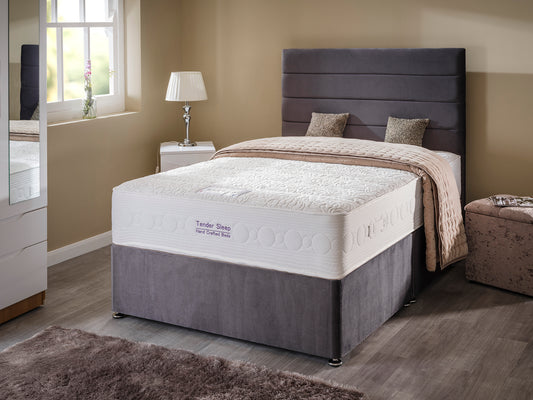
Best Mattress for Lower Back Pain - Premium Support Collection
Chronic lower back pain affects millions of people, turning restful sleep into a nightly struggle and impacting daily quality of life. The right mattress can be transformative—providing the targeted support and pressure relief your spine needs to heal and recover while you sleep. Our carefully curated collection of mattresses for lower back pain features orthopaedic-grade designs engineered specifically for spinal health. Each mattress in this collection combines advanced pocket spring technology with premium comfort layers to deliver the perfect balance of firm support and pressure-relieving cushioning. From the therapeutic extra-firm support of the Tendersleep Flexopaedic to the cooling comfort of the Diamond Laytech Gel Foam models, every option provides the spinal alignment and consistent support that orthopaedic specialists recommend. Whether you need the responsive adaptability of 2000 pocket springs or the clinical-grade firmness of a 12.5-gauge spring system, you'll find mattresses designed to reduce pain, improve posture, and restore restorative sleep. Invest in your spinal health with a mattress that works as hard as you do to eliminate lower back pain and wake refreshed every morning.
Key Takeaways
- Medium-firm to firm mattresses provide optimal spinal alignment and pressure relief for lower back pain sufferers
- Pocket spring systems with 1000+ springs offer superior targeted support and motion isolation
- Orthopaedic mattresses with reinforced edge support prevent sagging and maintain proper sleeping posture
- Cooling gel foam and breathable materials help reduce inflammation and promote healing during sleep
What should you look for in a mattress for lower back pain?
When selecting a mattress for lower back pain relief, prioritize spinal alignment, support consistency, and pressure distribution. The ideal mattress should maintain your spine's natural curvature while you sleep, preventing the lower back from sinking too deeply or remaining unsupported. Look for mattresses with at least 1000 pocket springs that respond independently to your body's contours, providing targeted support where you need it most. Orthopaedic-grade construction with reinforced lumbar zones helps maintain proper posture throughout the night. Additionally, consider mattresses with medium-firm to firm comfort levels, as these prevent excessive sinking while cushioning pressure points. Quality materials like high-density foam layers, cooling gel technology, and breathable fabrics enhance comfort while supporting therapeutic sleep. Edge-to-edge support systems ensure consistent firmness across the entire sleeping surface, preventing roll-off and maintaining support even when sleeping near the mattress perimeter.
How do you choose the right mattress firmness for lower back pain?
- Medium-firm mattresses (6-7 on firmness scale) suit most back pain sufferers, balancing support with pressure relief for optimal spinal alignment
- Extra firm options work best for heavier individuals or those with severe chronic back conditions requiring maximum support and minimal sinkage
- Consider your sleeping position: back sleepers benefit from medium-firm, while stomach sleepers need firmer support to prevent lower back arching
- Test the mattress by lying in your natural sleeping position—your spine should remain straight with hips and shoulders properly supported
- Pocket spring counts matter: 1000-2000 springs provide responsive support that adapts to your body while maintaining firm foundational stability
- Look for zoned support systems with reinforced lumbar areas that provide extra firmness specifically where lower back pain occurs
Read Also
Frequently Asked Questions
What firmness of mattress is best for lower back pain?
Can a bad mattress cause lower back pain?
What mattress do orthopedic doctors recommend for back pain?
How long does it take for a new mattress to help with back pain?
Should I choose pocket springs or memory foam for back pain?
Sources
- Best Mattress for Lower Back Pain — www.webmd.com
- Best Mattress for Back Pain — www.sleepfoundation.org
- The 6 Best Mattresses for Back Pain, According to Our Testing — www.nytimes.com
- Best Mattresses for Older Adults With Back Pain in 2025 — www.ncoa.org
- Best Mattresses for Back Pain — www.consumerreports.org
-
Emerald Firm Mattress 1000 Pocket Springs - Edge-to-Edge Support
Regular price From £449.00Regular priceUnit price per£565.00Sale price From £449.00Sale -
Tendersleep Flexopaedic Orthopaedic Mattress - Extra Firm Support
Regular price From £429.00Regular priceUnit price per£540.00Sale price From £429.00Sale -
Elite Orthopaedic Mattress - 12.5G Spring System Cool Touch
Regular price From £379.00Regular priceUnit price per£475.00Sale price From £379.00Sale -
Diamond Laytech Cooling Gel Foam Mattress - 1000 Pocket Springs
Regular price From £639.00Regular priceUnit price per£800.00Sale price From £639.00Sale -
Diamond Laytech 2000 Pocket Spring Mattress - Premium Foam
Regular price From £569.00Regular priceUnit price per£715.00Sale price From £569.00Sale -
Diamond Laytech 1000 Pocket Spring Mattress - Premium Foam Comfort
Regular price From £509.00Regular priceUnit price per£640.00Sale price From £509.00Sale