

Best Mattress Firmness for Lower Back Pain (UK): a craftsmanship-first guide
When your lower back hurts, the “right” firmness isn’t a slogan—it’s how precisely your mattress holds the natural curve of your spine. Think of it like a luxury suit: the fit matters. The finest Italian craftsmanship focuses on structure, stitch, and fabric; great mattresses do the same with spring counts, foam density, and hand-tufting. Use this UK-focused decision framework—with quick tools and carefully selected product picks from Mattress Land’s ranges, organised by firmness and build quality—to make a confident choice at any budget without guesswork.
Key takeaways / summary
- Lower back pain often improves on medium-firm to firm support, adjusted for your body weight and sleep position.
- General rules: side = medium-soft to medium; back = medium-firm; stomach = firm (to stop hips dipping).
- Weight guidance: under ~59 kg may prefer slightly softer top layers; 59–104 kg typically suits medium-firm; over ~104 kg usually benefits from firm/orthopaedic support.
- Construction matters: pocket springs contour and aid alignment; gel/memory foams add pressure relief; “ortho” builds prioritise stable, flatter support.
- Craftsmanship cues: even stitching/tufting, consistent edge support, quality comfort foams or natural fibres, and a stable spring unit (e.g., 1000–2000 pocket springs; open coil for firmer “orthopaedic” feel) as reflected in the picks below.
- Budget framing (typical UK market): under £400 = budget; £400–£800 = mid-range; £800+ = premium. Prioritise build quality over headline materials.
- During any home trial, evaluate: spinal neutrality (no swayback), morning stiffness, motion transfer, and temperature. Test for at least 14–30 nights where available.
- Helpful deep-dives while you compare: Orthopaedic mattress picks, foam options by sleep style, and durable builds for heavier individuals.
1) Firmness science: how support keeps your spine neutral
Your goal is a neutral spine: ears–shoulders–hips aligned when lying down. Too soft and your hips sink; too firm and your lower back can’t “settle” into the surface. The best builds combine a stable core (open coil or pocket springs) with a comfort layer (gel/memory/latex-like foams or natural fibres) that cushions the hips and shoulders without losing alignment. In most UK ranges, the medium-firm zone (roughly 6–7/10) is the common “sweet spot” for lower-back support—see the firmness scale near the end for a practical translation.
Hips sink; lower back strains overnight.
Spine holds its natural curve; muscles relax.
Back can’t “sink” enough; pressure points form.
Quality materials—like well-stitched cashmere covers or dense foams—behave predictably over time. Just as Italian craftsmanship relies on structure and fabric integrity, mattress results hinge on the consistency of spring units, foam density, and tufting technique. If you’re between two firmness options (or share a bed), choose the slightly firmer build for alignment and add a plush topper only if needed.
2) Sleep position analysis
Match firmness to how your body loads the mattress overnight. Use these as starting points, then fine-tune with the weight guidance and tools below.
- Side sleepers: medium-soft to medium. You want enough give at shoulders and hips, but a stable core to keep the mid-spine neutral.
- Back sleepers: medium-firm. Balanced surface that supports the lumbar curve to minimise morning stiffness.
- Stomach sleepers: firm. Keeps hips from dipping and compressing the lower back.
Practical tip: pillow height should keep your neck level with your spine. Side sleepers often need a higher pillow; stomach sleepers typically benefit from a thin pillow (or none) to reduce lumbar compression.
3) Body-weight calculator
4) Pain-location mapping
Lower back pain (lumbar) tends to improve with a stable, slightly firmer core. If tightness is higher (mid-back or between shoulder blades), you may need more pressure relief at the shoulders; if it’s centred in the lumbar area, focus on mid-section support that prevents hip drop.
- Lower lumbar ache: prioritise medium-firm (back sleepers) or firm (stomach sleepers).
- Wider back tightness or muscle fatigue: balance support with a pressure-relieving comfort layer (gel/memory foams, or plush natural fibres over pocket springs).
- Partner with different needs: a pocket-sprung hybrid can cushion both sides more evenly than a single-piece foam block.
For detailed orthopaedic-style options, see 10 Best Orthopedic Mattresses for Back Pain Relief.
5) Interactive firmness quiz
6) Product recommendations by firmness category
We’ve grouped 12 mattresses by the kind of support profile commonly sought for lower-back comfort. The focus is on craftsmanship cues and build types (pocket springs, gel foam, orthopaedic/open coil) visible across Mattress Land’s ranges. If you want a deeper materials overview first, browse our foam guide by sleep style and durable innerspring picks for heavier bodies.
Best for most lower-back pain (balanced medium-firm hybrids)

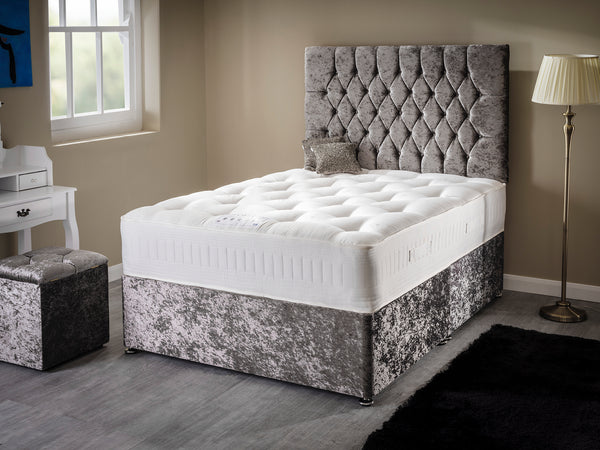
Diamond Laytech 1000 Pocket Mattress
Materials: 1000 pocket springs; Laytech
- 1000 pocket springs for body-contouring support
- Laytech comfort layer offers a responsive, latex-like feel
- Best for: back and combination sleepers seeking balanced alignment with a touch of bounce
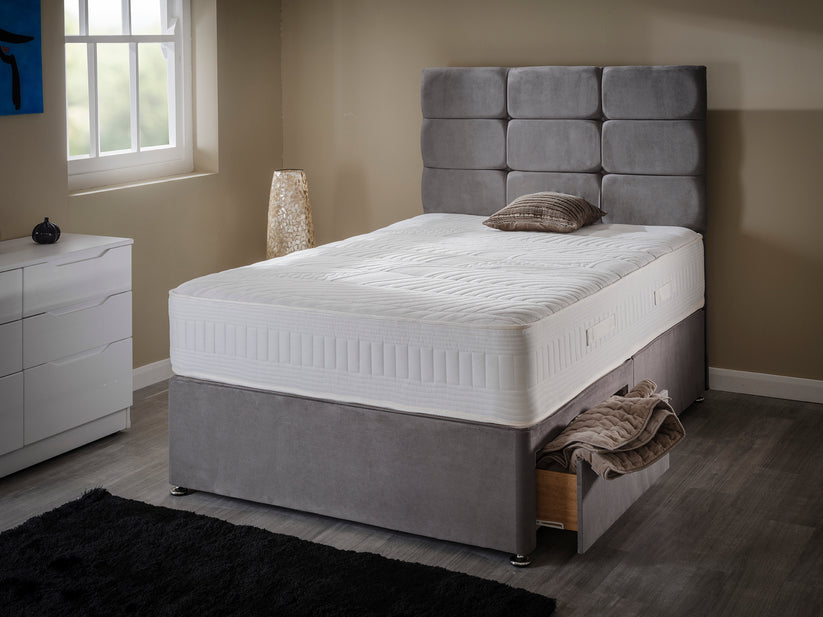
Onyx 3000 Mattress
Materials: High-density foam; pocket springs
- Hybrid construction balances support and pressure relief
- High-density foam pairs with pocketed springs for stability
- Best for: couples wanting motion control with dependable lumbar support
Topaz Gel Foam Mattress
Materials: Cooling gel foam
- Cooling gel foam comfort layer
- Designed for pressure relief with a supportive core
- Best for: warm sleepers and side/back sleepers seeking cushioned pressure relief
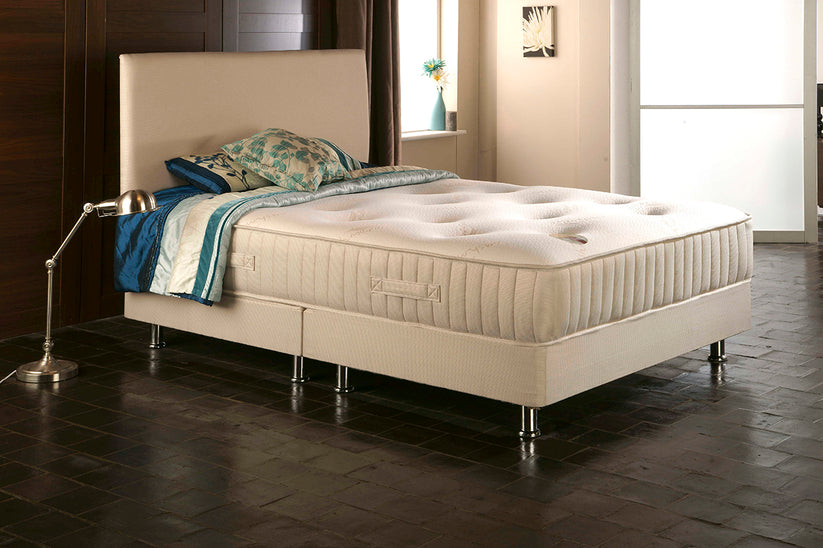
Cashmere Pocket Mattress
Materials: Cashmere; pocket springs
- Luxury cashmere finish with pocketed spring support
- Premium textile touch with stable, evenly distributed support
- Best for: sleepers who value a refined, breathable finish with dependable alignment
Firm / orthopaedic picks (extra stability for stomach sleepers and heavier bodies)

Galaxy Ortho Mattress
Materials: —
- Orthopaedic support profile for a flatter, steadier feel
- Firm feel typically suits stomach sleepers and heavier users
- Best for: prioritising hip stability to ease lumbar compression
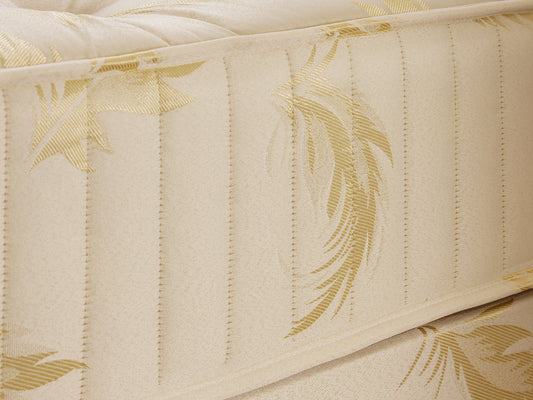
Knightsbridge Ortho Mattress
Materials: —
- Orthopaedic emphasis for firmer, uniform support
- Craftsmanship-led detailing visible in border and tufting
- Best for: sleepers who prefer a traditional, supportive feel with minimal sink
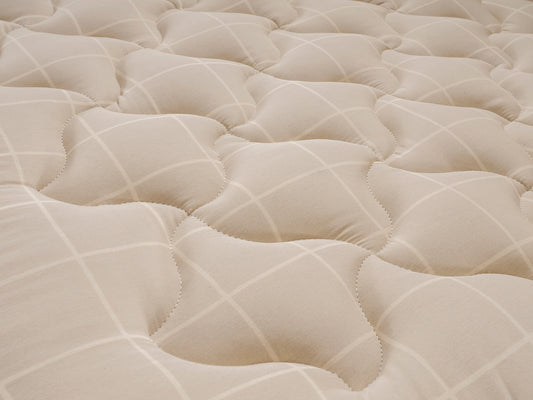
Orthopaedic Contract Mattress
Materials: —
- Orthopaedic, contract-grade stability for consistent firmness
- Built for durability and reliable support night after night
- Best for: heavier users and guest rooms needing robust, uniform feel

Open Coil Sprung Contract Mattress
Materials: Open coil
- Open-coil core for a firmer, flatter feel
- Contract-level durability emphasis
- Best for: firm-feel seekers and hospitality/guest setups requiring resilience
Pressure relief for side/back sleepers who still need alignment (medium to medium-firm)
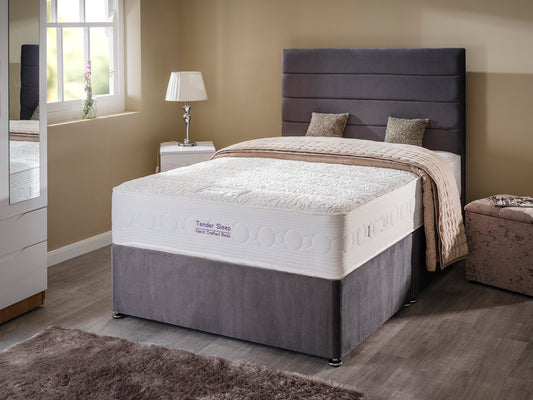
Diamond Laytech 2000 Pocket Mattress
Materials: 2000 pocket springs; Laytech
- High pocket count for nuanced contouring and support
- Laytech component adds a responsive, buoyant comfort layer
- Best for: side/back sleepers who want pressure relief without losing midline support

1000 Pocket Supreme Mattress
Materials: 1000 pocket springs
- 1000-pocket core for balanced contouring
- Support profile tuned for back alignment
- Best for: value-focused buyers seeking reliable, all-round support
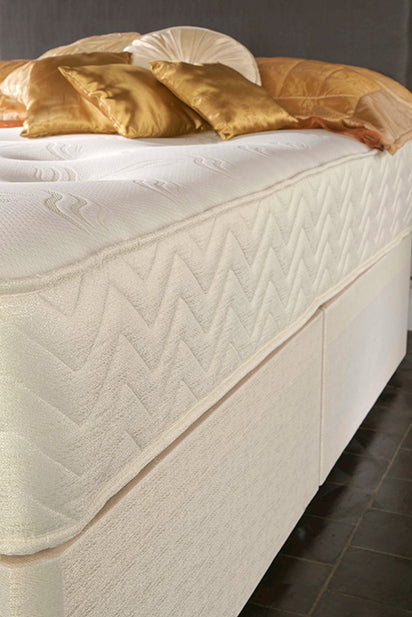
Memory Sprung Mattress
Materials: Memory comfort; springs
- Spring unit with memory comfort for pressure relief
- Motion control helps reduce partner disturbance
- Best for: side/back couples wanting softer top comfort over stable support
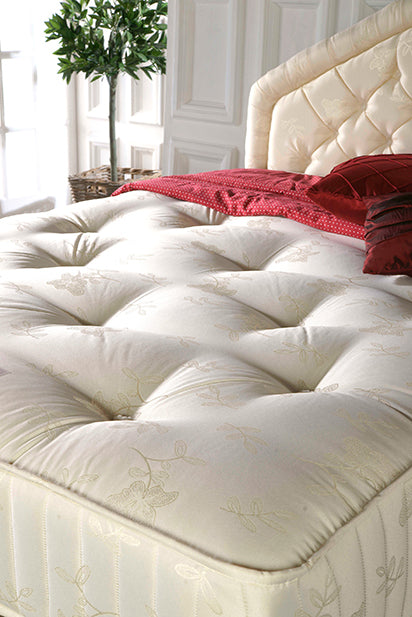
Luxury Gold Mattress
Materials: —
- Premium, craftsmanship-forward finish
- Plush visual cues align to side/back comfort aims
- Best for: those who prioritise tactile luxury alongside balanced support
For deeper comparisons on builds and materials, see: foam mattresses by sleep style, temperature-regulating foam vs. innerspring, and durable innerspring picks for heavier individuals.
7) How to test firmness during a comfort guarantee
- Give it time: your body and the comfort layers need 2–4 weeks to settle.
- Track mornings: rate your lower-back feel from 1 (pain-free) to 10 (very sore) for at least 14 consecutive mornings.
- Check spinal neutrality: lie on your side and have a partner check that your spine is straight; on your back, slide a flat hand under the lumbar—some contact is good; an obvious gap means too firm, a “wedged” feel means too soft.
- Partner test: roll together/roll off; check edge stability and midline support.
- Heat and humidity: if you run hot, prefer breathable pocket systems and cooling foams; test with your normal bedding.
- Rotate the mattress: rotate head-to-foot every 2–4 weeks during the break-in, then quarterly, to even out settlement.
- Base check: ensure your bed base is sound; slatted bases should be closely spaced and supportive to avoid sagging.
8) Pillows, base and care: small fixes that make a big difference
- Pillow fit: neck alignment is half the battle. Adjust pillow loft so your nose points straight up (back sleepers) or your neck stays level (side sleepers). Stomach sleepers usually need very low loft.
- Topper tweaks: if alignment feels right but pressure points persist, a thin, high-quality topper can add comfort without sacrificing support.
- Room climate: hot sleepers often do better with breathable covers, pocket springs, and gel-infused or open-cell foams.
- Protect and maintain: use a breathable protector and rotate regularly to extend comfort life.
Firmness scale overview (typical UK interpretation)
Brand scales vary, but a practical translation looks like this:
| Scale | Feel | Typical sleeper | Notes |
|---|---|---|---|
| 3–4 | Medium-soft | Side sleepers under ~59 kg | Focus on pressure relief with stable core |
| 5–6 | Medium | Mixed/side sleepers | Comfort plus alignment; pocket hybrids shine |
| 6–7 | Medium-firm | Back sleepers, many with lower-back pain | Common sweet spot for lumbar neutrality |
| 8–9 | Firm | Stomach sleepers; heavier bodies | Prevents hip sink; orthopaedic builds |
Craftsmanship and material value: what separates long-term comfort
- Spring integrity: pocket spring counts (e.g., 1000–2000) distribute weight evenly; open coil offers a flatter, firmer feel.
- Comfort layers: gel foam and memory foam cushion pressure points; Laytech-style layers add responsive comfort with less “stuck” feeling.
- Natural finishes: cashmere and quality textiles signal attention to detail, akin to fine tailoring.
- Edge and tufting: look for even tufting and supportive edges—hallmarks of durable construction.
As with a well-made Italian suit, the quality of the “canvas” (spring unit), the “lining” (comfort layers), and the “stitch” (tufting/binding) determine the fit and how well it holds that fit over years—not just on night one. If you’re comparing similar models, prioritise proven build methods and consistent workmanship over marketing names.